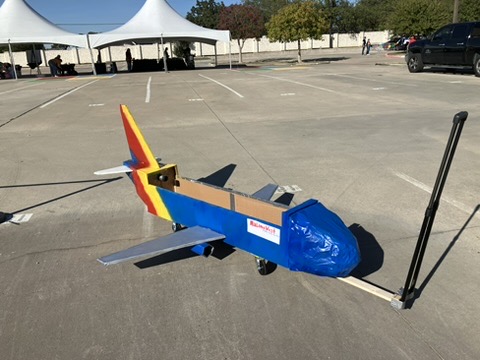
One prompt at a time
It started with a prompt to Claude: "Scale a 737 so the cabin is 18" wide." The answer was a 737-800 almost 17 feet long, which wasn't going to fit anywhere. So I kept asking: what's the shortest 737, what if the cabin is 14", can the wings be shorter? Each answer narrowed it down.
The real requirements came out along the way:
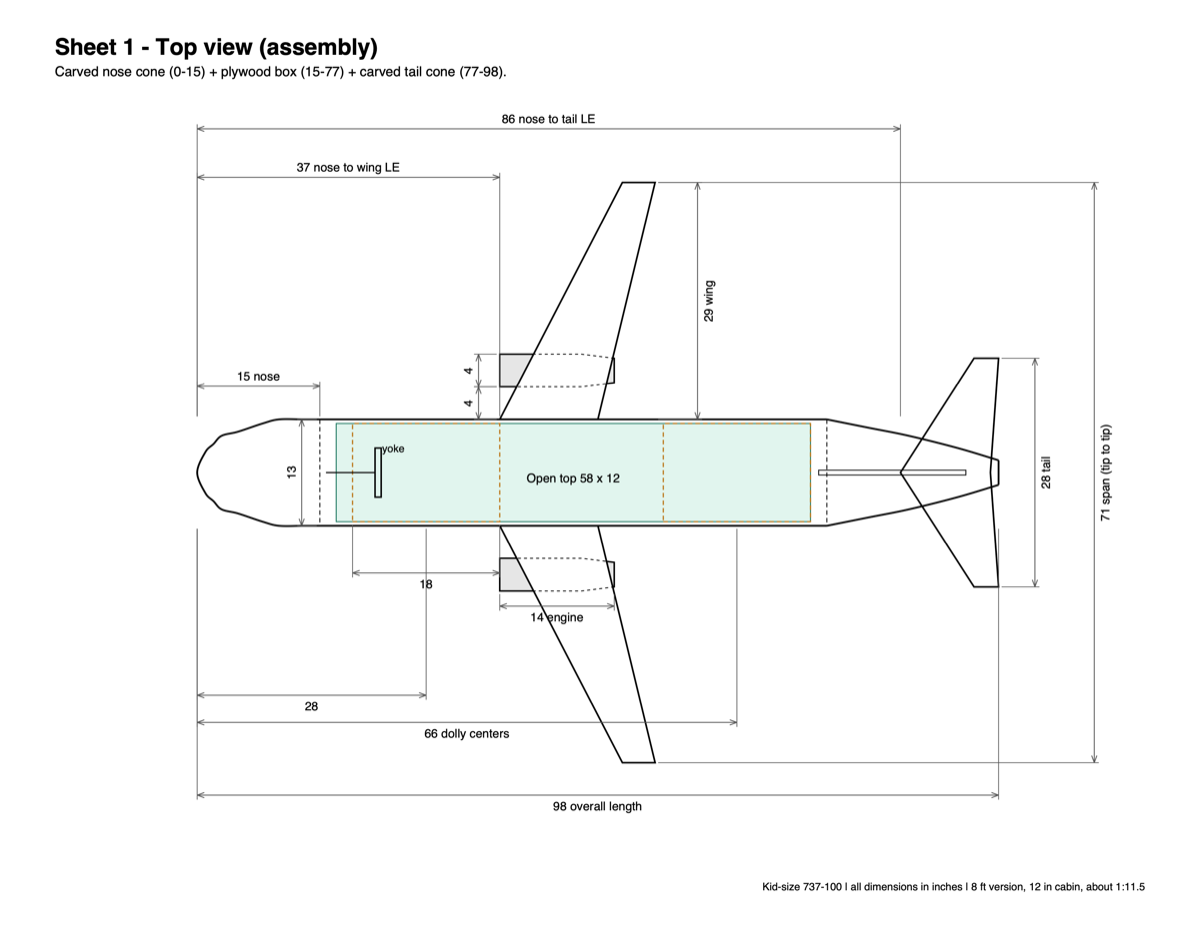
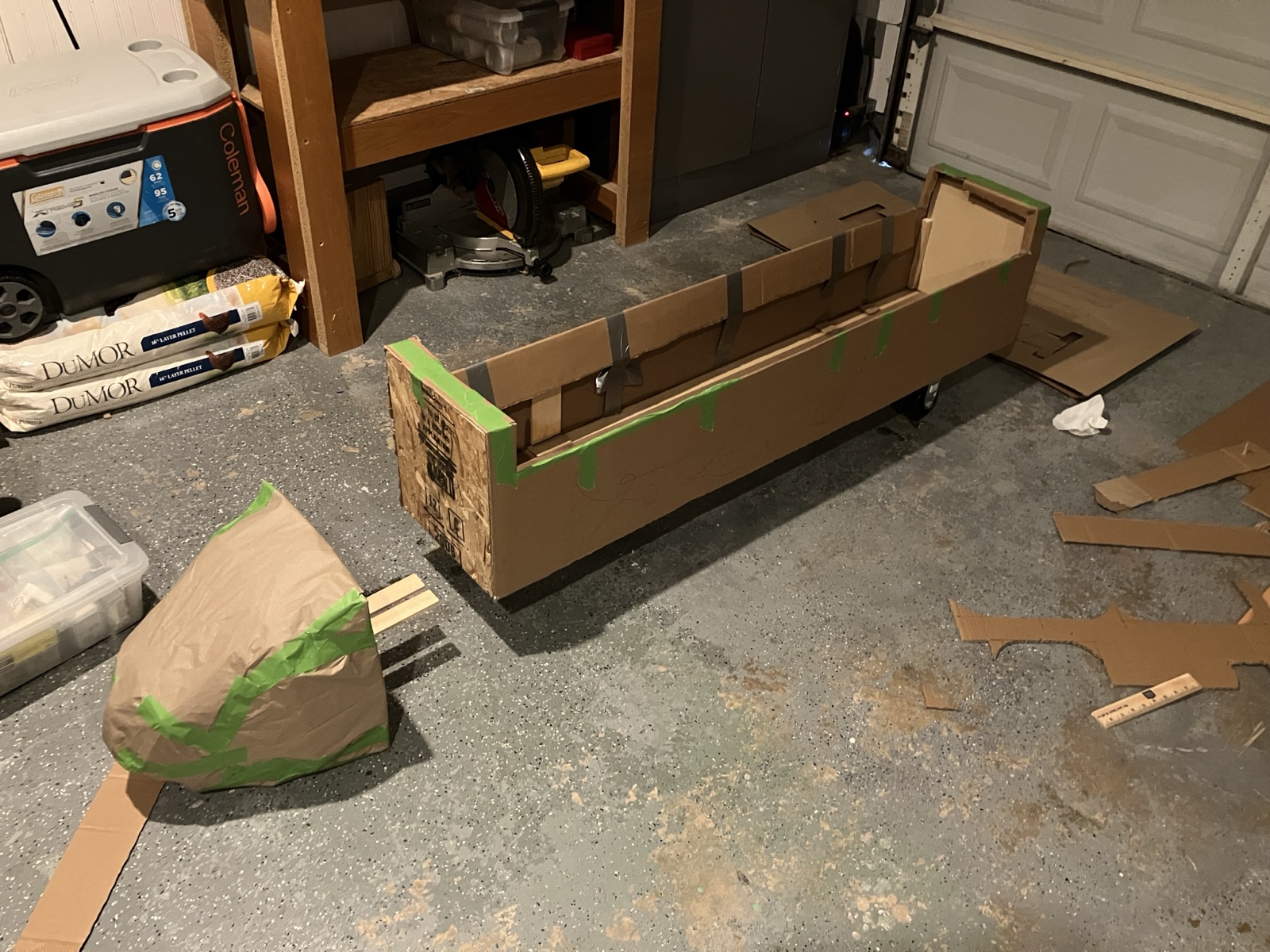
- Room for the kids sitting sled-style, each between the knees of the one behind. That set the 58"-long opening and a 12" minimum cabin width.
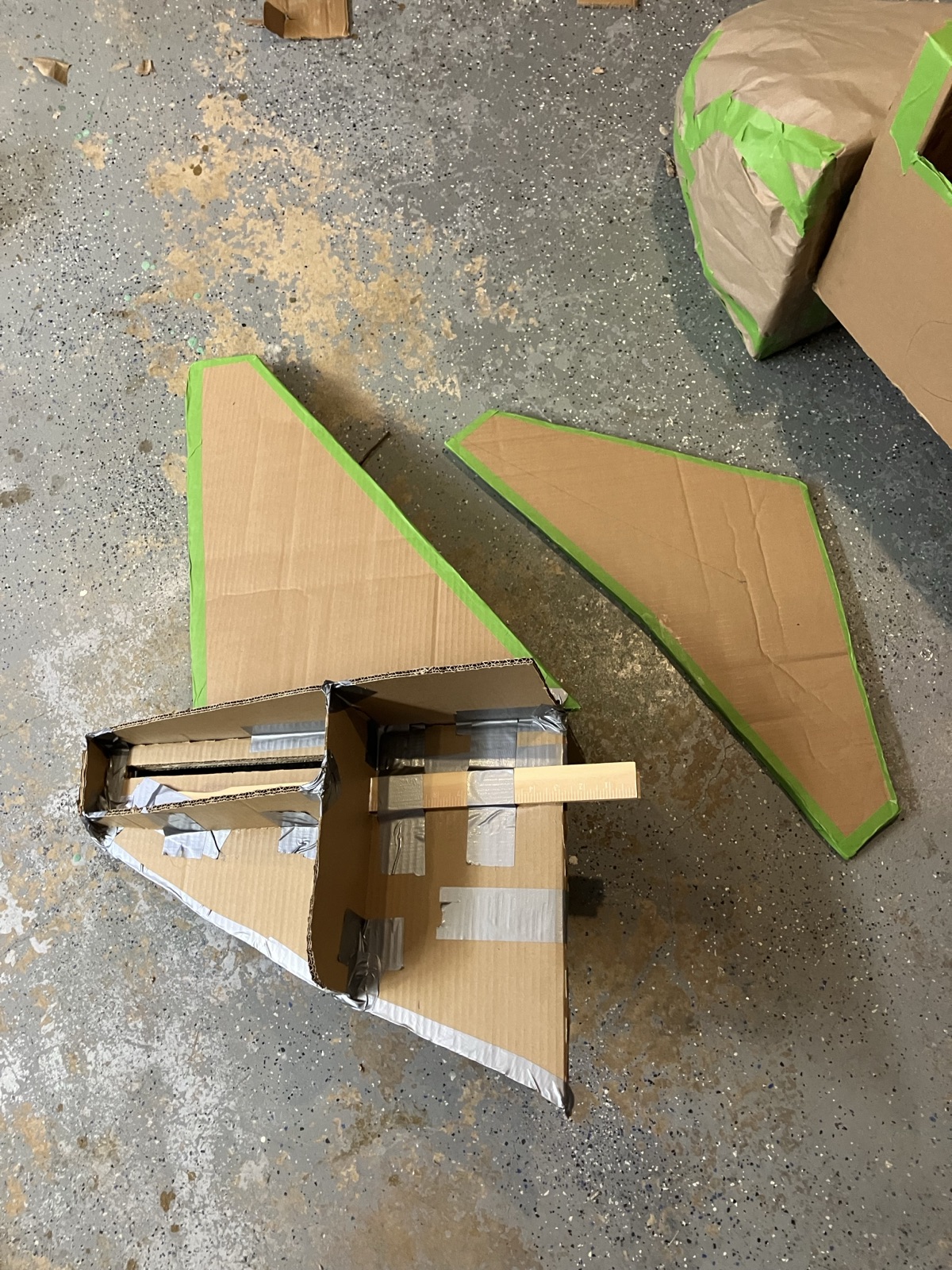
- No more than 6 ft tip to tip. At true scale the wings would be 97", so they're built at 73% scale while the fuselage stays almost exactly true to the real plane, at about 1:11.5.
- An open top. A seated child is taller than a scale fuselage, so the roof comes off over the cabin.
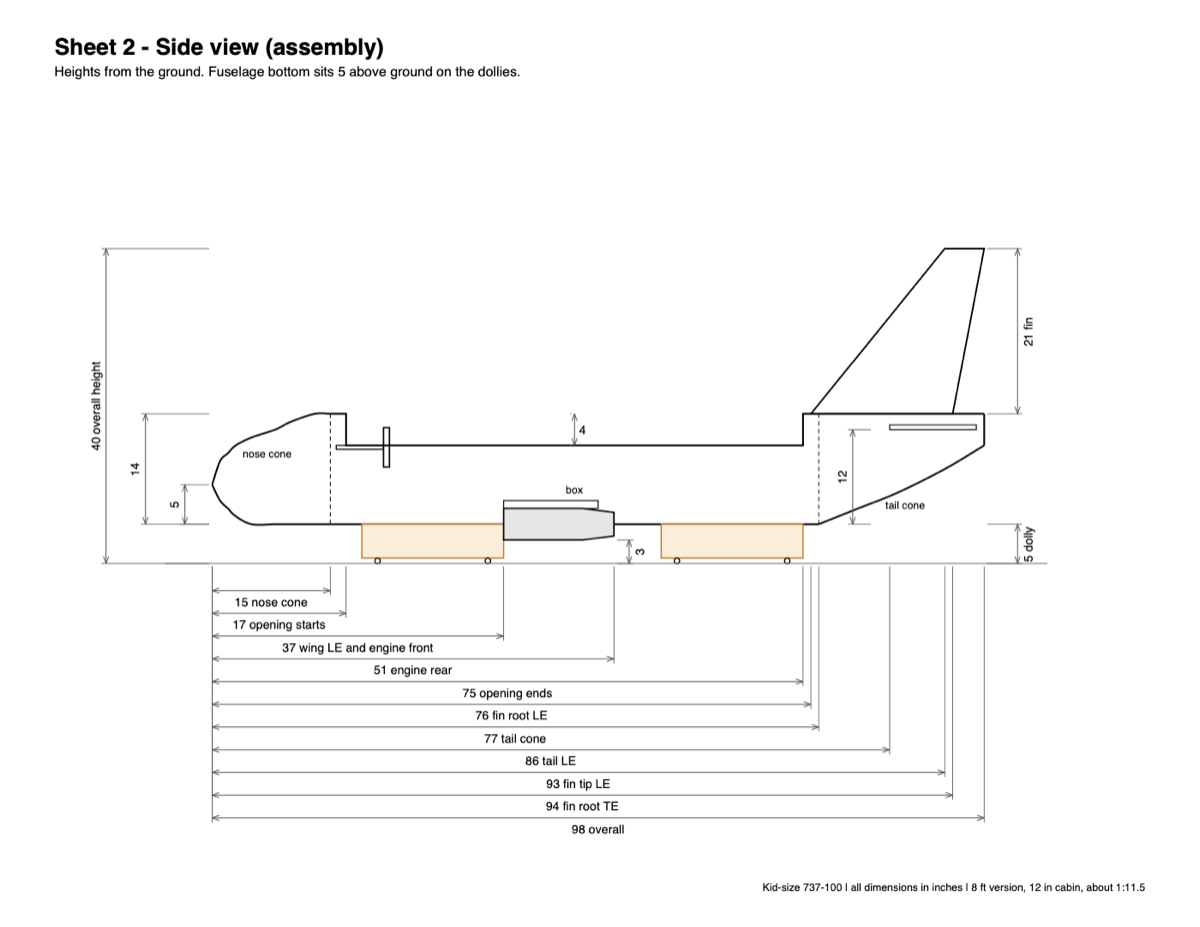
- Two small furniture dollies instead of landing gear, bolted to a plywood floor. I changed these to simple casters in the end, with swivels on the front.
Getting the proportions right
Once there was a PDF, the work shifted to making it look like a 737 and not just a box with wings. I asked for a dimension on every edge so the parts would cut in proportion, then started questioning the shape:
- The nose was too blunt. It became a carved foam cone with the tip 5" up and a rounded chin, traced from a grid on the plans.
- The fin was too narrow and too upright. It was checked against Boeing's airport planning data for the 737-100 and redrawn with a longer root and more sweep. The horizontal tail grew to match.
- The engines were too long once the wings were scaled down. They went from 18" to 14", still 4" across so they look right next to the fuselage.
- A yoke for the front seat. A 6"-wide, ram's-horn yoke on a sliding dowel, with stop collars so it never gets close enough to pinch fingers.
The cockpit
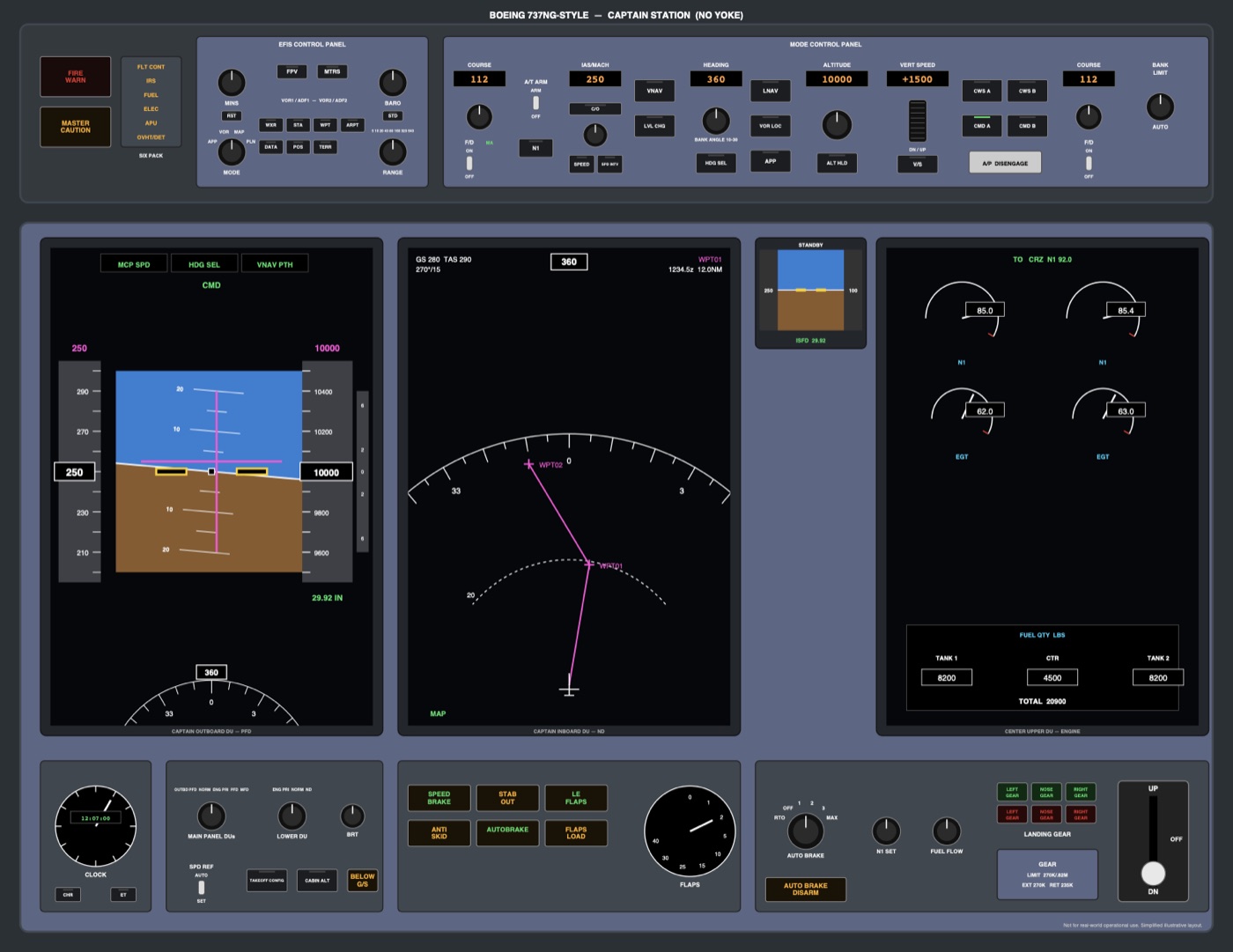
The last piece came from a separate conversation: a full-page, captain's-side 737 panel to print for the cockpit, with the autopilot panel, flight displays, engine gauges and gear lever. "No yoke," because the plane already has one.
Build it yourself
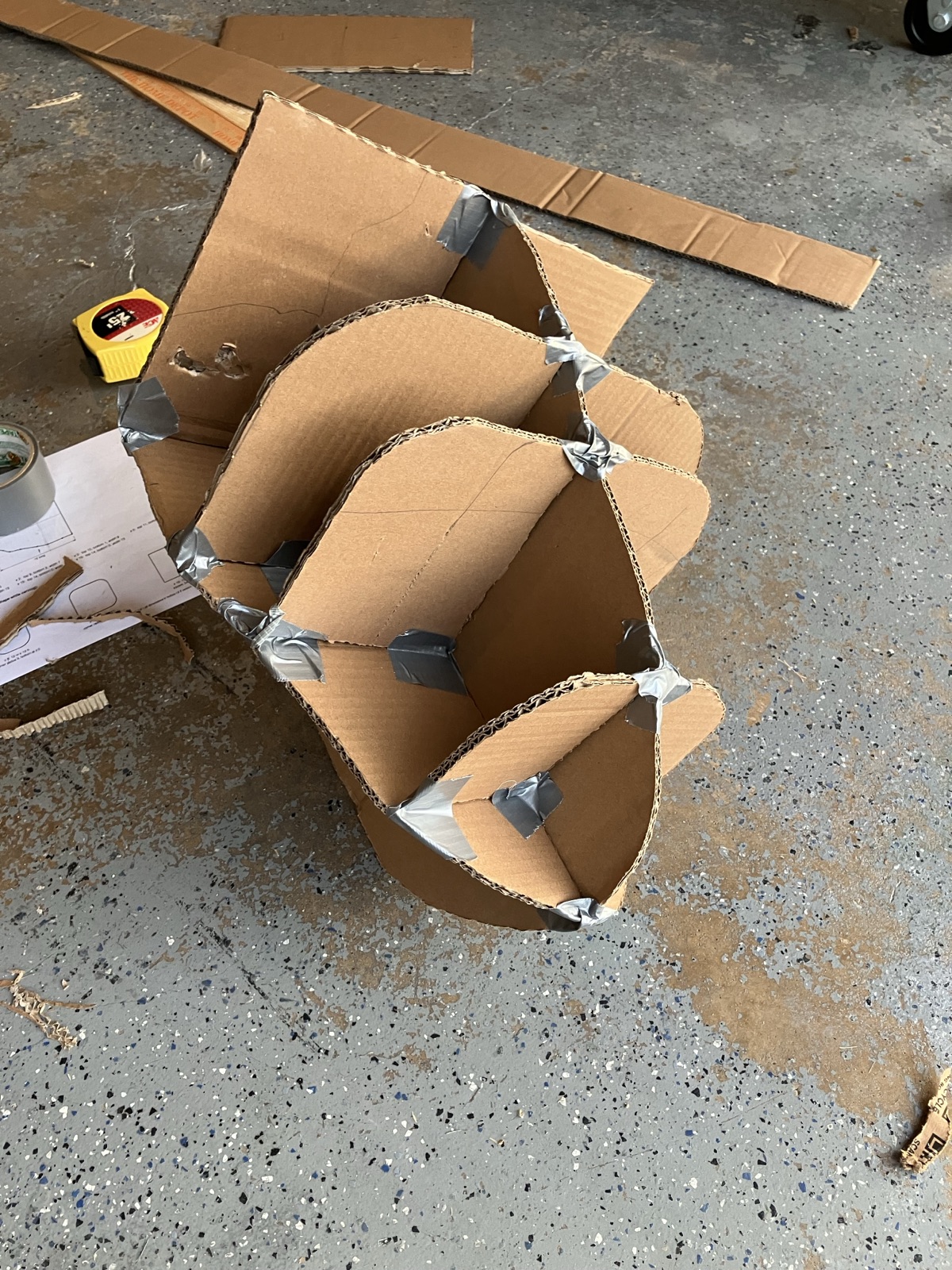
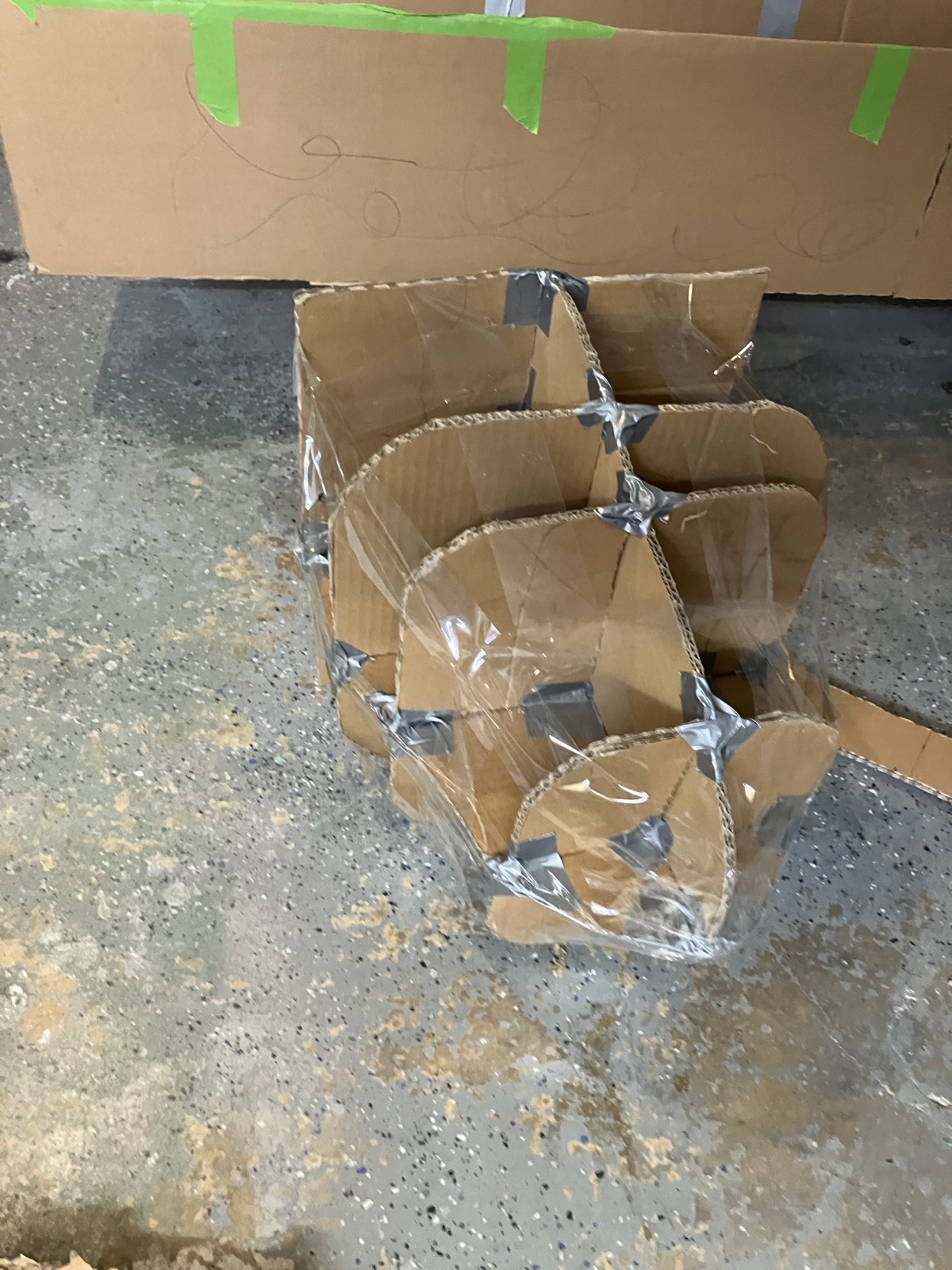
Everything is in inches, and every edge is dimensioned. The plans call for ½" plywood sides, ¾" plywood for the bulkheads, floor and yoke, and 2" XPS foam board for the carved nose and tail cones. However, I used a light wood box for the fuselage, and then cardboard and paper for the rest, building out ribs for the nose and tail.
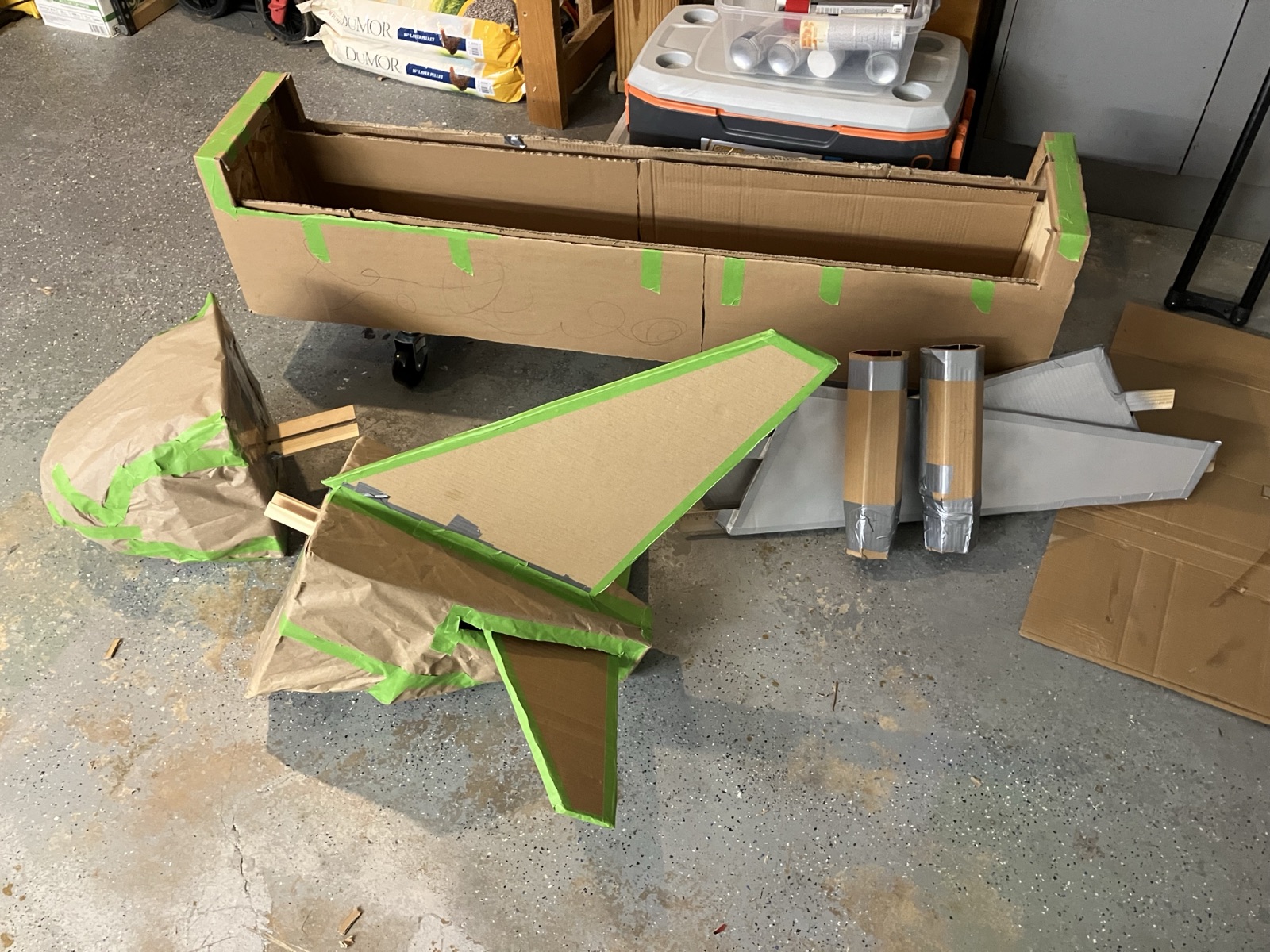
A homemade toy, not a certified product. Supervise kids, pad every edge, and lock the casters when it's parked.